Owning your content infrastructure instead of renting it
Most hosted CMS platforms trade convenience for control: you get a dashboard, but your content, your uptime, and your data residency all live on someone else's schedule. Fanpino CMS is Docker-first from the ground up — the backend, frontend, and database all ship as containers you run, which means the infrastructure decisions (where it's hosted, how it's backed up, who can access the database directly) stay with the team that owns the product, not a vendor's terms of service.
Security that doesn't stop at a login form
Authentication supports both JWT and Google OAuth2, and role-based access control (RBAC) means "admin" isn't a single all-or-nothing role — editors, support staff, and full administrators can be scoped to exactly what they need to touch. For a team that's grown past one person managing everything, that distinction is what keeps a support agent from being able to quietly change product pricing.
What "production ready" actually means here
- Docker containerization for the backend, frontend, and supporting services — the same containers used in development are what ship to production, so "works on my machine" isn't a separate problem to solve later.
- Optimized builds for the frontend, meaning the public-facing site stays fast even as the admin dashboard grows more features underneath it.
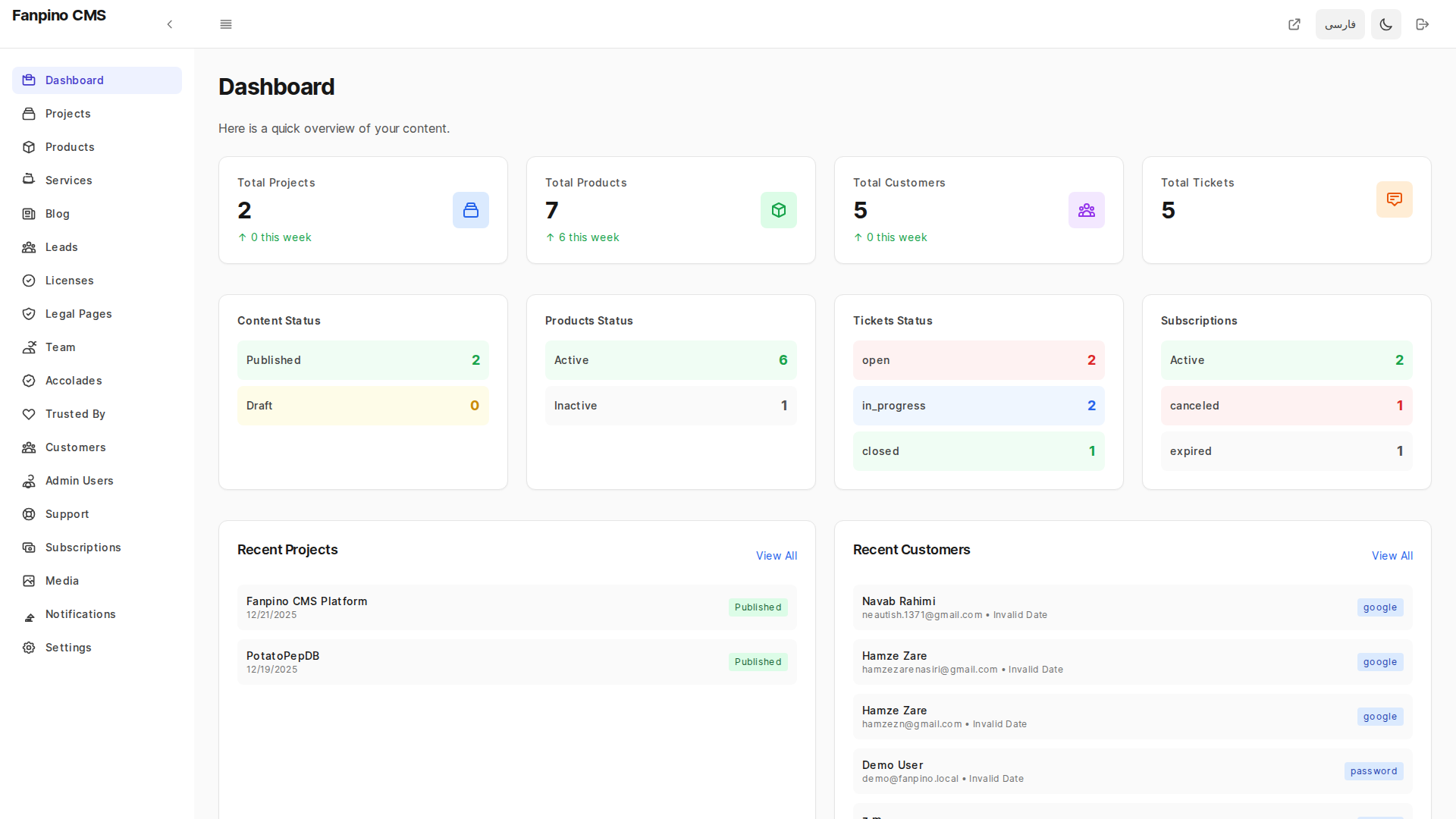
- A single admin dashboard for products, projects, services, customers, support tickets, and blog content — one surface to operate, back up, and secure, instead of five disconnected tools glued together with exports and imports.
Why this matters more than it sounds
The real cost of a hosted SaaS CMS usually isn't the monthly fee — it's the migration project nobody wants to do later, when the platform's roadmap stops matching what the business actually needs. Self-hosting up front trades a small amount of ops responsibility now for not having that conversation in three years.
Who this is for
Teams that already run Docker in production for something else, and would rather add one more well-documented container than hand a second product's content and customer data to a platform they don't control.