SEO for a bilingual site is a different job, not a bigger one
Running search optimization across two languages isn't "do SEO twice." Meta titles, meta descriptions, and slugs all need to exist per language without duplicating the underlying page, and search engines need to be told clearly which version serves which audience. Fanpino CMS treats meta_title and meta_description as bilingual fields on every article and product, so neither language ships as an SEO afterthought.
Where most CMS setups quietly lose marketing ground
A common failure mode: the English version of a page gets a hand-written meta description, and the Persian version either reuses the English one verbatim or has none at all. Search engines index the Persian page with no meaningful snippet, click-through rate drops, and nobody notices until organic traffic is already down.
What's built in
- Per-language meta tags on every article and product, not just a single "SEO fields" section bolted onto the English content.
- Slugs and structured content that keep each language's URL clean and indexable on its own.
- Dual currency display so a visitor's search intent (pricing in Toman vs. USD) matches what they actually see on landing — a quieter but real conversion factor search marketers tend to underweight.
Content operations, not just content
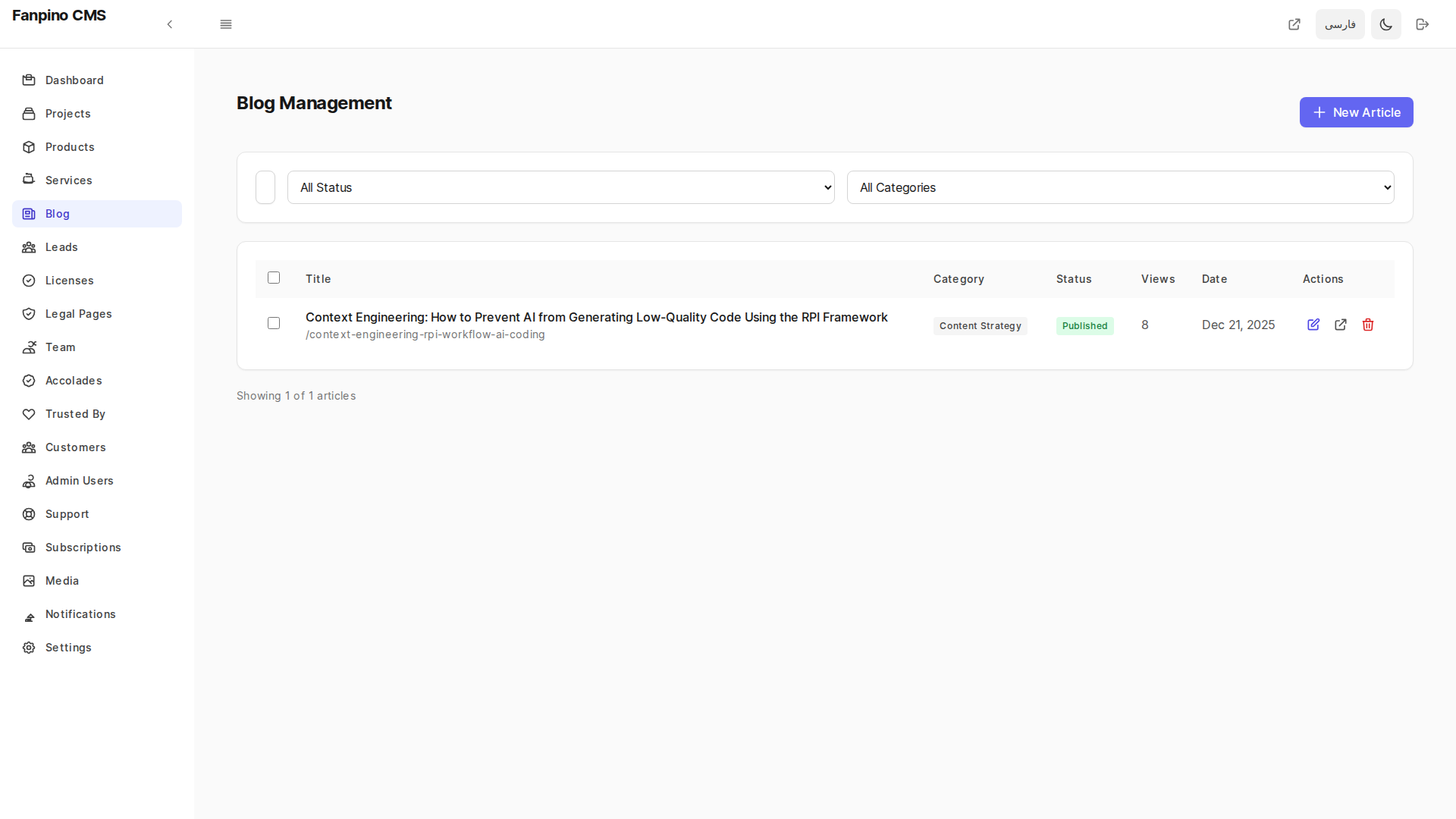
The admin dashboard covers products, projects, services, customers, support tickets, and blog posts from one interface — the same place editors already work, rather than a separate SEO tool bolted on afterward. That matters less for the SEO checklist itself and more for whether anyone on the team actually keeps it up to date past the first month.
The practical takeaway
If a site serves two language markets, its SEO and marketing tooling should treat both as equally real from the schema up — not as one primary language plus a translation layer.