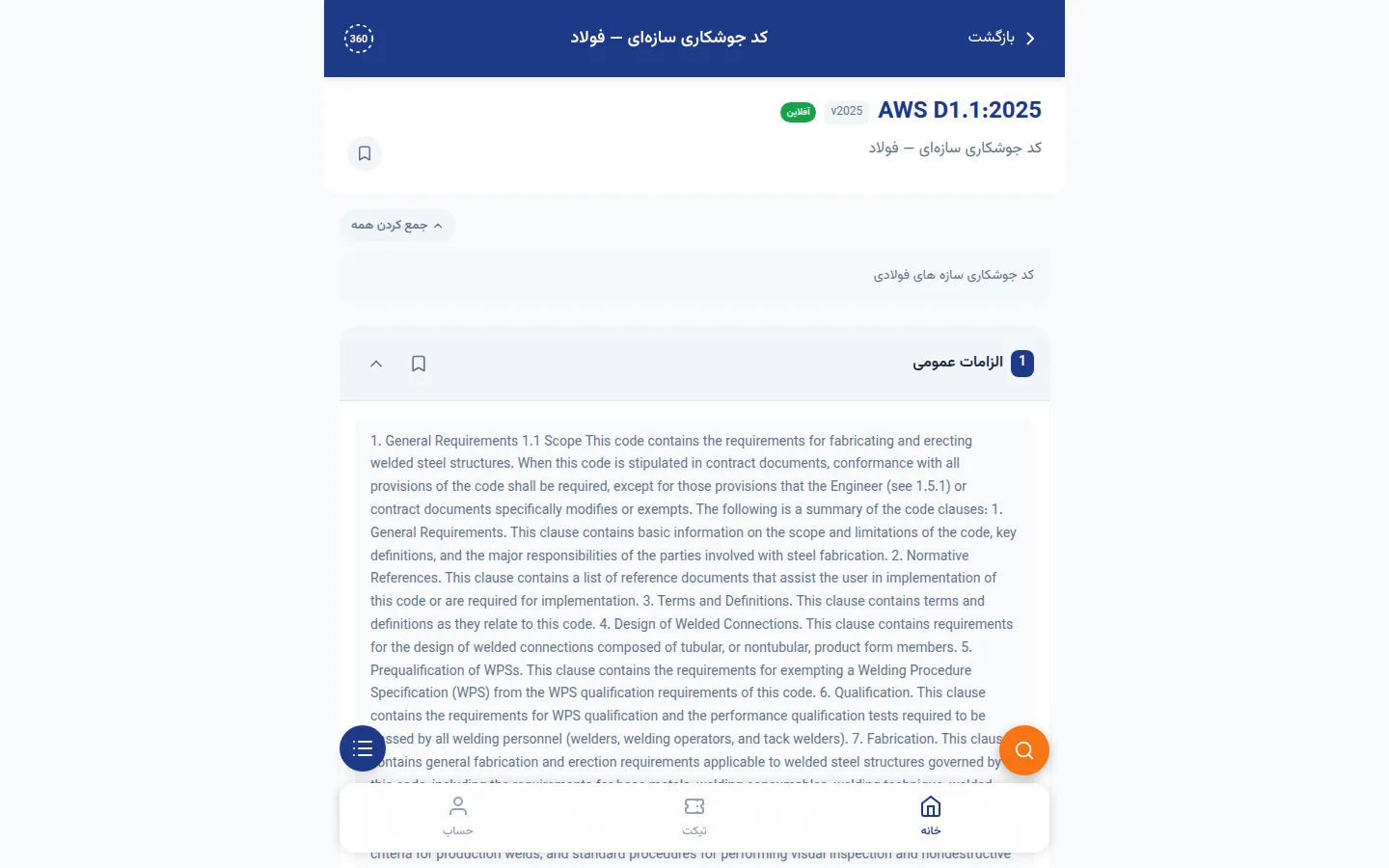
Engineers usually have the standard's PDF. The problem is somewhere else: mid-calculation, when they need one specific clause, they spend a few minutes hunting through the table of contents and page numbers — and often grab the wrong clause anyway, because the PDF on their laptop is an older revision than what the project is actually referencing now.
The PDF problem: hard to find, harder to keep current
An industrial standard usually runs a hundred to three hundred pages. The table of contents helps, but when you're after one specific number inside a table nested under a sub-clause, keyword search doesn't always work either, because clause numbering isn't consistent across standards. The result is engineers either trust memory ("I think clause 7.4.2 said that") or rely on a copy saved on their desktop that nobody's sure is the latest edition.
The real cost lands in the moment, not at inspection
This is different from the problem of reconstructing compliance at inspection time. That one is a documentation gap. This one is a decision made on the spot: an engineer pulls a number from the wrong or outdated clause and uses it in a calculation or a drawing. If it's caught later, that's rework. If it isn't, that's real risk sitting in the design.
What actually helps
Clause-level, searchable access to the standard text, not one monolithic PDF. When each clause is its own linkable unit, finding it is faster, and when the standard gets revised, it's obvious exactly which clauses changed.