An English-only welding standard is a liability for a Persian-speaking crew
AWS, API, and ASME standards ship in English, and most inspection teams working in Persian-speaking countries handle that the same informal way: someone translates the tricky clauses once, the translation lives in a shared document or a WhatsApp message, and it slowly drifts from whatever the standard actually says as revisions come out. Nobody signed off on that translation. Nobody's checking it against the next edition.
Where an informal translation actually fails
- Precision terms don't survive casual translation. A weld-defect classification or an acceptance-criteria threshold has one correct technical meaning — a translation done under time pressure by whoever's available doesn't carry the same liability as a maintained, standard-matched Persian text.
- Revisions get missed. A standard updates, the English PDF gets replaced, and the informal Persian version quietly stays on the old edition because updating it wasn't anyone's job.
- Nobody can point to where the translation came from — which matters the moment a disputed inspection asks "which version of the standard, in which language, was actually used."
What Probe361 does instead
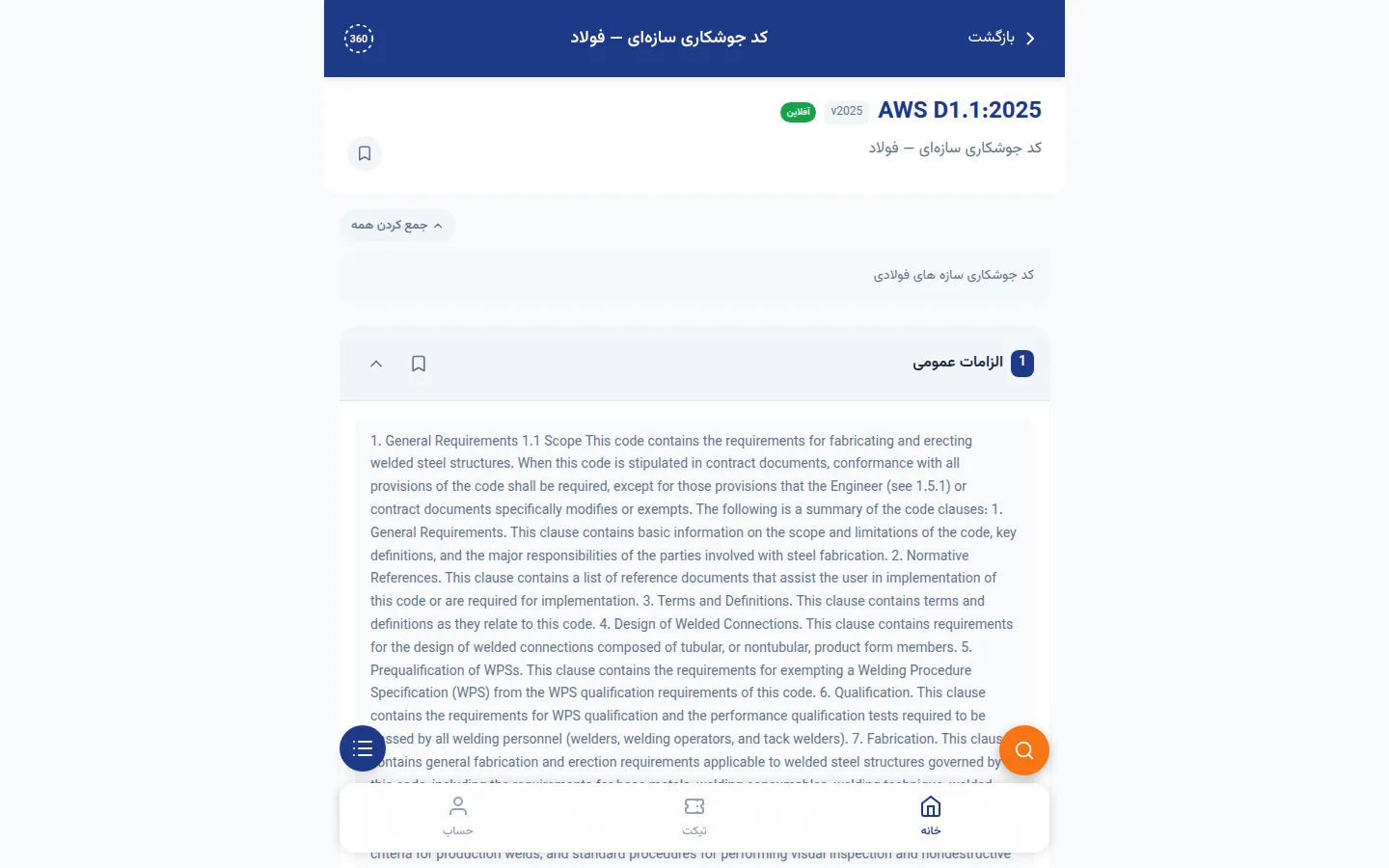
Every standard carries maintained Persian translations alongside the original English, structured clause-by-clause so a term maps to the exact clause it belongs to — not a separate document that has to be manually kept in sync. Figures and tables (the parts a text-only translation usually skips) are included at full resolution with the same structure.
The real cost of getting this wrong
A misread acceptance criterion because the translation was informal doesn't show up as a translation problem in a post-mortem — it shows up as a failed weld or a rejected inspection, with the actual root cause buried three steps back. Bilingual content that's actually maintained against the current edition removes that failure mode at the source.