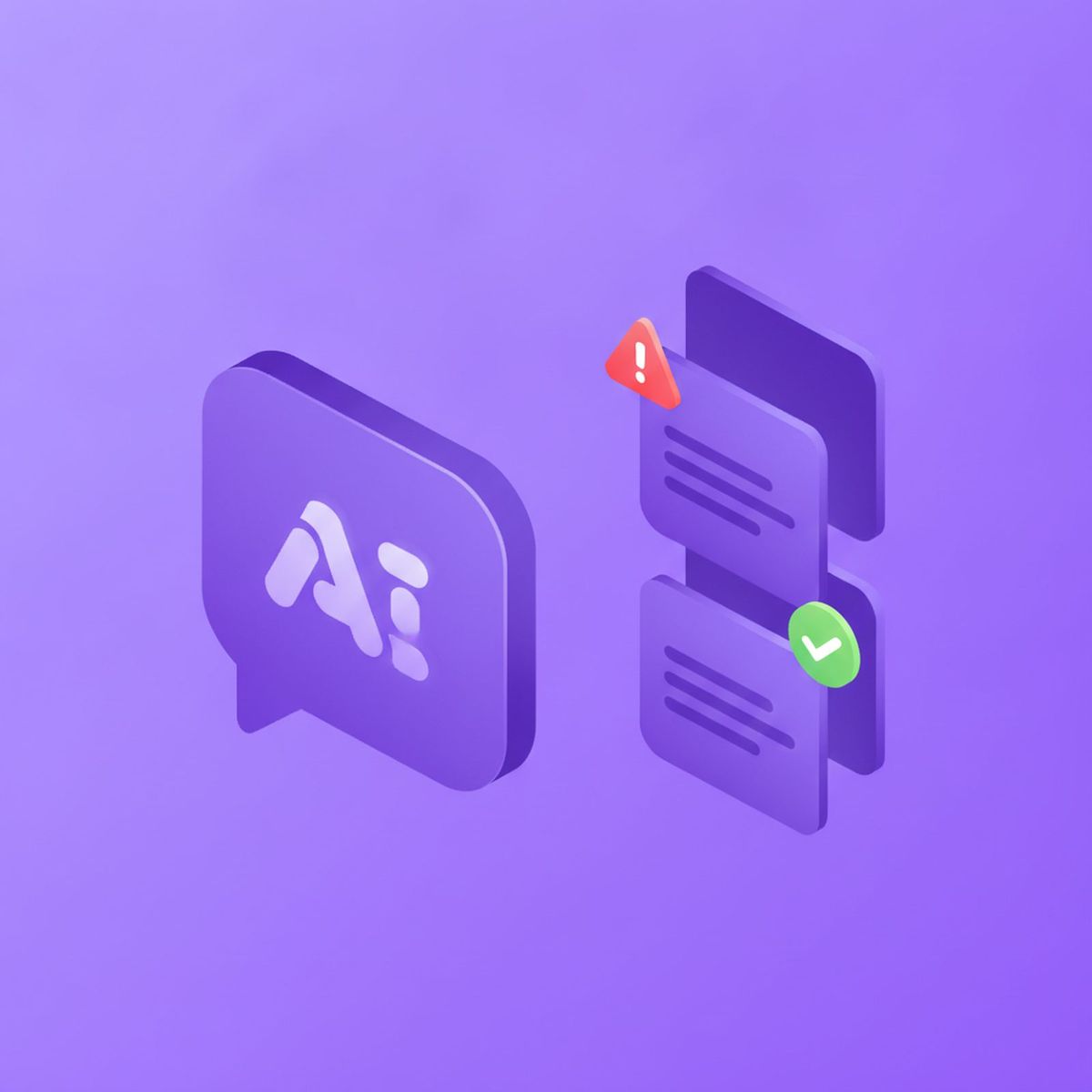
The easiest way to give an organization an internal AI assistant is to point a general-purpose model at a shared drive and let people ask it questions. It also tends to go wrong in the same handful of ways. Intranet content is rarely one clean version of the truth — overlapping drafts, superseded policies, documents with no clear owner — and a model that isn't required to say where an answer came from will confidently synthesize a plausible-sounding version instead of admitting the source is unclear. The 2026 pattern researchers describe for this failure mode is specific: the assistant doesn't just guess wrong, it cites a policy that doesn't exist, in the same polished tone as a correct answer, which is exactly why staff stop double-checking it.
Access control is a separate failure mode, and just as common. A general assistant fed everything in a shared drive answers everyone's questions from the same pool of documents — an intern asking a benign question and an executive asking about a legal matter draw from the same context window, unless something upstream is actively filtering by who's asking. Retrofitting that filter after the fact, once an assistant is already answering from a flat document dump, is a much harder problem than building it in from the start.
An answer has to name its source, or say it doesn't have one
FanMind's answer to the citation problem is structural rather than a prompting trick: every response is required to point to a specific document and page, and when the underlying content doesn't support a confident answer, the assistant is built to say so rather than fill the gap with something fluent. That is a narrower assistant than a general-purpose one — it will decline questions a broader model would happily guess at — but it means an employee reading an answer can go check the page it came from, the same way they'd check a citation in any other reference.
The assistant has to know who's asking, not just what they're asking
Organization-wide access control in FanMind runs at the same level as the documents themselves: a given user's question is answered only from what that user is actually permitted to see, so the same assistant serves a department's day-to-day policy questions and a sensitive HR or legal matter without either one leaking into the other's context. Scoped web search is limited to cases where it's genuinely needed rather than defaulting on for everything, and an analytics/feedback loop surfaces the answers staff flag as wrong so a governance owner can fix the source document, not just the one bad answer.