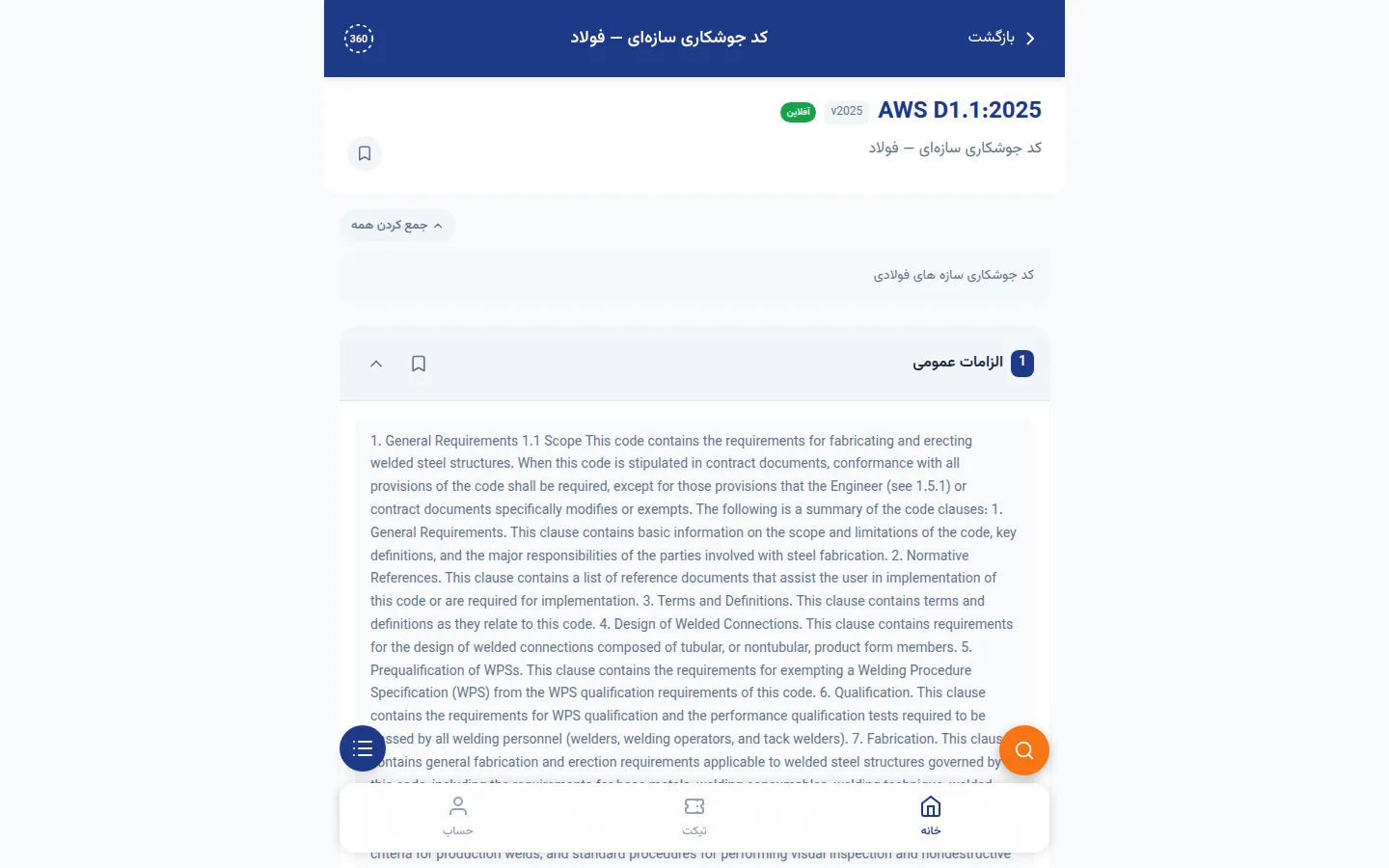
On industrial projects, "standards compliance" usually gets discussed once the inspector has arrived. Until then, everyone assumes the work was done to standard. The catch is that in most organizations nobody knows exactly which revision of which standard was the reference.
Problem one: the revision
Standards get revised. A contract signed three years ago may cite an edition that's now withdrawn. If the execution team works to the new edition and the contract names the old one, the discrepancy surfaces at handover — the most expensive possible moment. The first fix is to record the edition number and year explicitly in project documents, not just the standard's name. The September 2026 release of ISO 9001 is a live example: certified organizations now have a fixed window to move their quality system to the new edition.
Problem two: access for the people doing the work
In practice the standard sits on one person's computer in the engineering office. Whoever is making the decision on site has no access and works from experience. Experience is usually right — until the standard changes. Mobile access to the relevant clause, at the moment of the decision, is what actually changes outcomes. If you are deciding between a shared PDF folder and a subscription platform for that, this comparison covers offline access and edition tracking.
Problem three: chained references
Every standard cites several others, which cite more. Complying with one clause may require three other documents nobody has read. A system that links those references makes the chain navigable.
A checklist that works before the inspection
- The list of standards the contract references, with edition number and year
- Confirmation that the copy available to the execution team matches that list
- Training records: who was briefed, when, on which clause
- Internal inspection records, before the external one
In short
Compliance isn't something you prove at the end of a project; it's something you record throughout it. If the records weren't captured as the work happened, reconstructing them at inspection time is neither possible nor defensible.