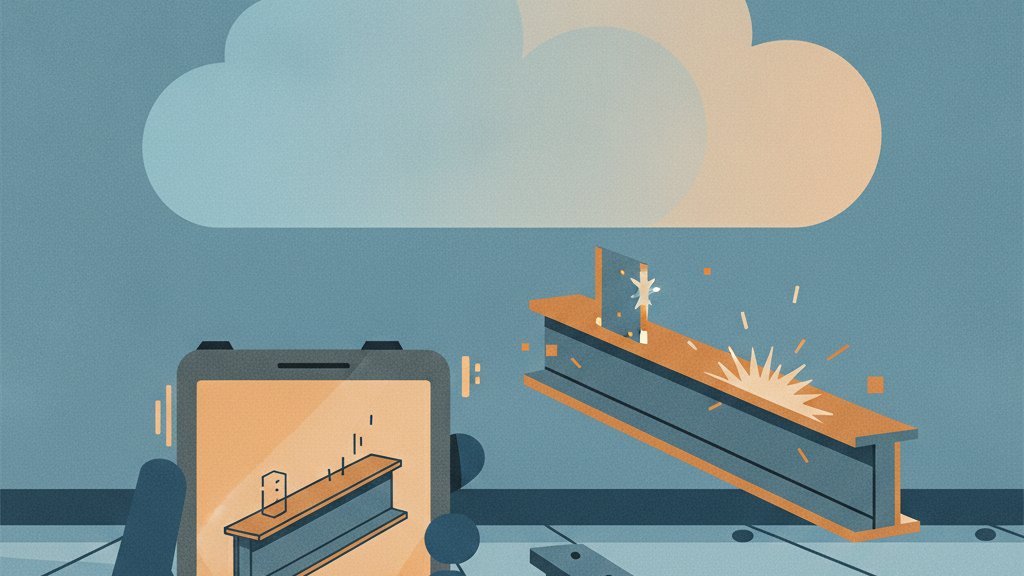
The bill of materials is usually a second draft of a decision the engineer already made
A Tekla model already knows every part, every profile, every quantity — the structural engineer made those decisions once, inside the model. What happens next, at most steel fabricators, is someone re-types that same information into a spreadsheet or an MES so the shop floor has a bill of materials to work from. Every re-entry is a chance for a typo, a missed revision, or a part count that doesn't match what the model actually says by the time it reaches the shop floor.
Where the gap actually shows up
- Revisions lag. The engineer updates the model; the spreadsheet BOM doesn't get the memo until someone remembers to re-export and re-type it.
- Transcription errors compound. A profile size or quantity typo doesn't get caught until a part doesn't fit or material runs short mid-production.
- There's no single source of truth — when the model and the BOM disagree, nobody's sure which one is actually current without checking both by hand.
What a direct Tekla → BOM pipeline changes
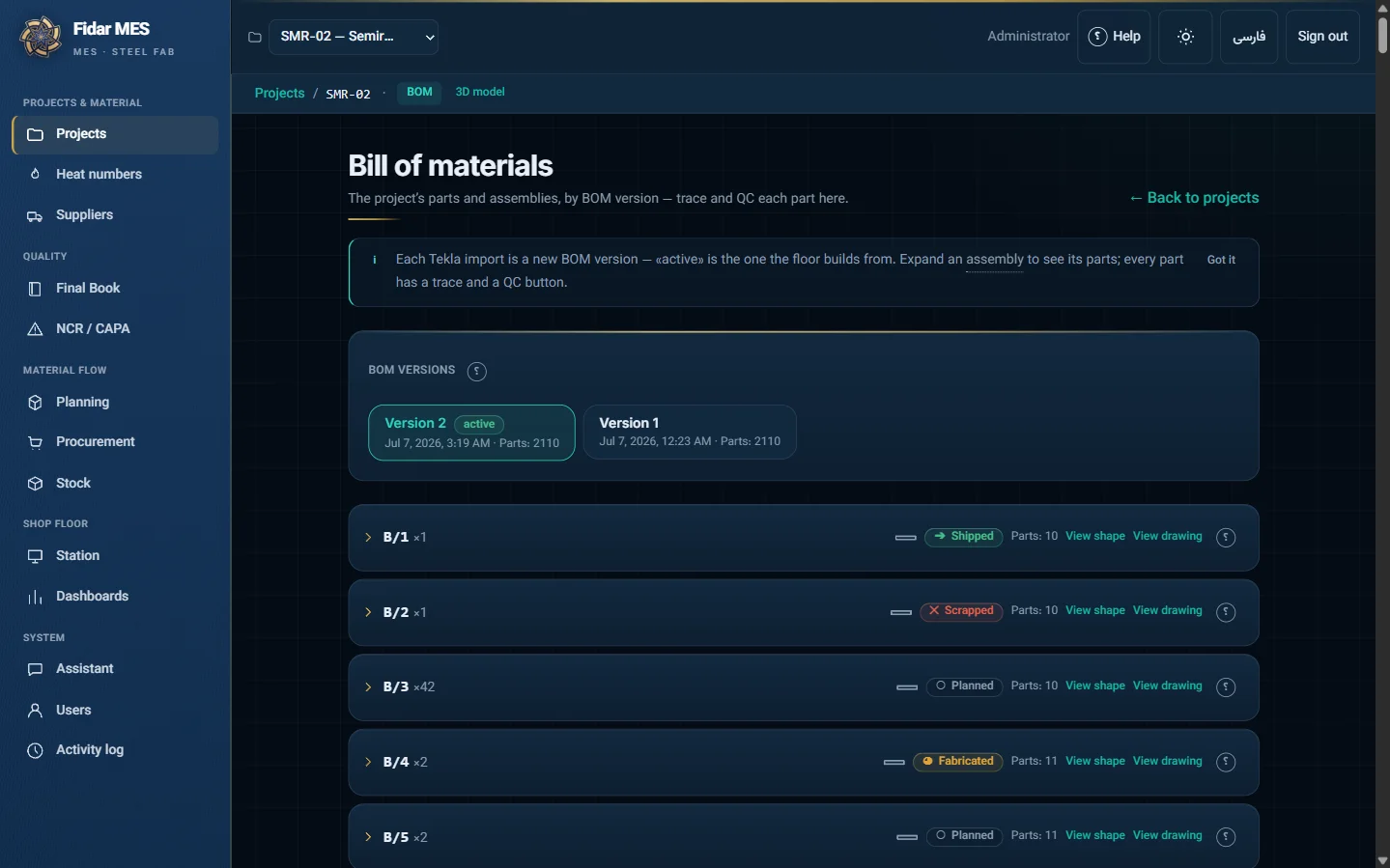
Fidar's Tekla plugin pulls the model straight into a structured bill of materials — no manual re-entry step exists to introduce drift in the first place. A model revision produces an updated BOM as a mechanical consequence of updating the model, not a separate task someone has to remember to do.
Why this matters more than it sounds
This isn't a convenience feature — it removes an entire category of error at the source instead of catching it downstream with better inspection. The BOM production teams work from and the model engineers actually designed stop being two documents that can silently disagree.