Manufacturing & MES
15 practical articles on manufacturing & mes from Fanpino. Latest: CBAM for Aluminium Exporters in Saudi Arabia and the UAE: What Applies From 2026
CBAM for Aluminium Exporters in Saudi Arabia and the UAE: What Applies From 2026
Aluminium is in CBAM's scope with its own rules: only direct emissions count for now, PFCs must be monitored, and the billet usually carries most of the number. Dates, thresholds and what to set up in the plant, checked against the regulation.
ISO 3834 Welding Records Checklist: The 15 Records an Auditor Asks For
ISO 3834 audits usually get hard because of scattered records, not weld quality. A clause-by-clause checklist for ISO 3834-2, from contract review and welder certificates to heat numbers, NDT and NCRs, plus a ten-minute test to run before the audit.
SteelFlow MES vs Tekla PowerFab: Which One Fits a Steel Shop Floor?
PowerFab is a broad fabrication management suite. SteelFlow is a narrower MES built for the shop floor, offline first, with weld QC tied to every part. Where each one fits, based on Trimble's own documentation.
Factory Forward UAE: What a Steel Fabricator Can Show in a One-Day ITTI Assessment
MoIAT's Factory Forward UAE starts with a one-day ITTI assessment. Five questions that show whether a fabrication shop can prove what it does, and a free two-week rehearsal.
Piece-Mark Barcode Tracking in Steel Fabrication: From Cutting to Dispatch Without Retyping Marks
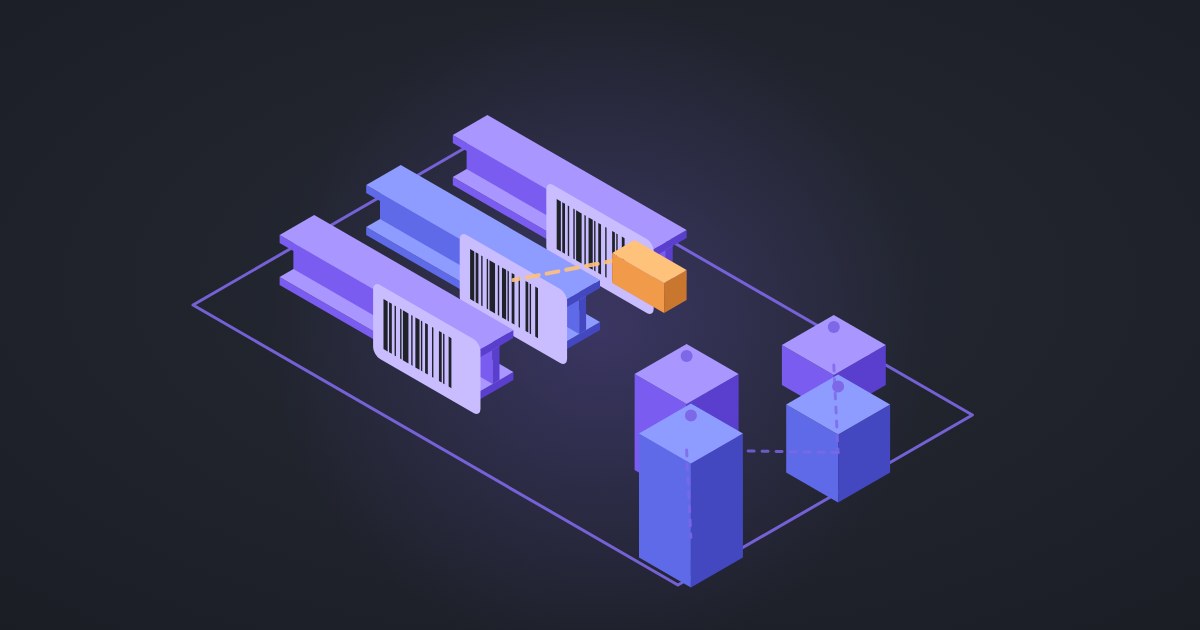
Why painted marks and typed entries cause errors at every station, one label per physical piece, Code 128 versus QR on a shop floor, scanning when the network drops, and a two-week rollout plan.
EU CBAM for Gulf Steel Fabricators: The Data You Owe Before September 2027
Steel structures under CN 7308 are already inside EU CBAM, the first paid declaration is due 30 September 2027, and a downstream extension is being voted this autumn. For a fabricator, the real work is tonnage by mill per shipment.
Planning a Steel Fabrication Shop Around Scheduled Power Cuts
When the grid publishes cut days, they become a planning input. How to sort shop work by power need, plan the week backwards from the cut day, keep erection sequence as the priority and keep recording when the power is off.
Digital Product Passports for Steel: What Fabricators Actually Need to Track
The EU DPP registry went live in July 2026, but the iron and steel delegated act is still a draft. What the JRC proposal says the steel passport will hold, why the obligation sits with mills, and what fabricators should record now.
What Is MES? A Plain-Language Guide for Steel Fabricators
What a manufacturing execution system does, where it sits next to ERP in ISA-95, and what it looks like in a structural steel shop: Tekla-to-BOM, heat traceability, offline floor tablets and linked weld QC.
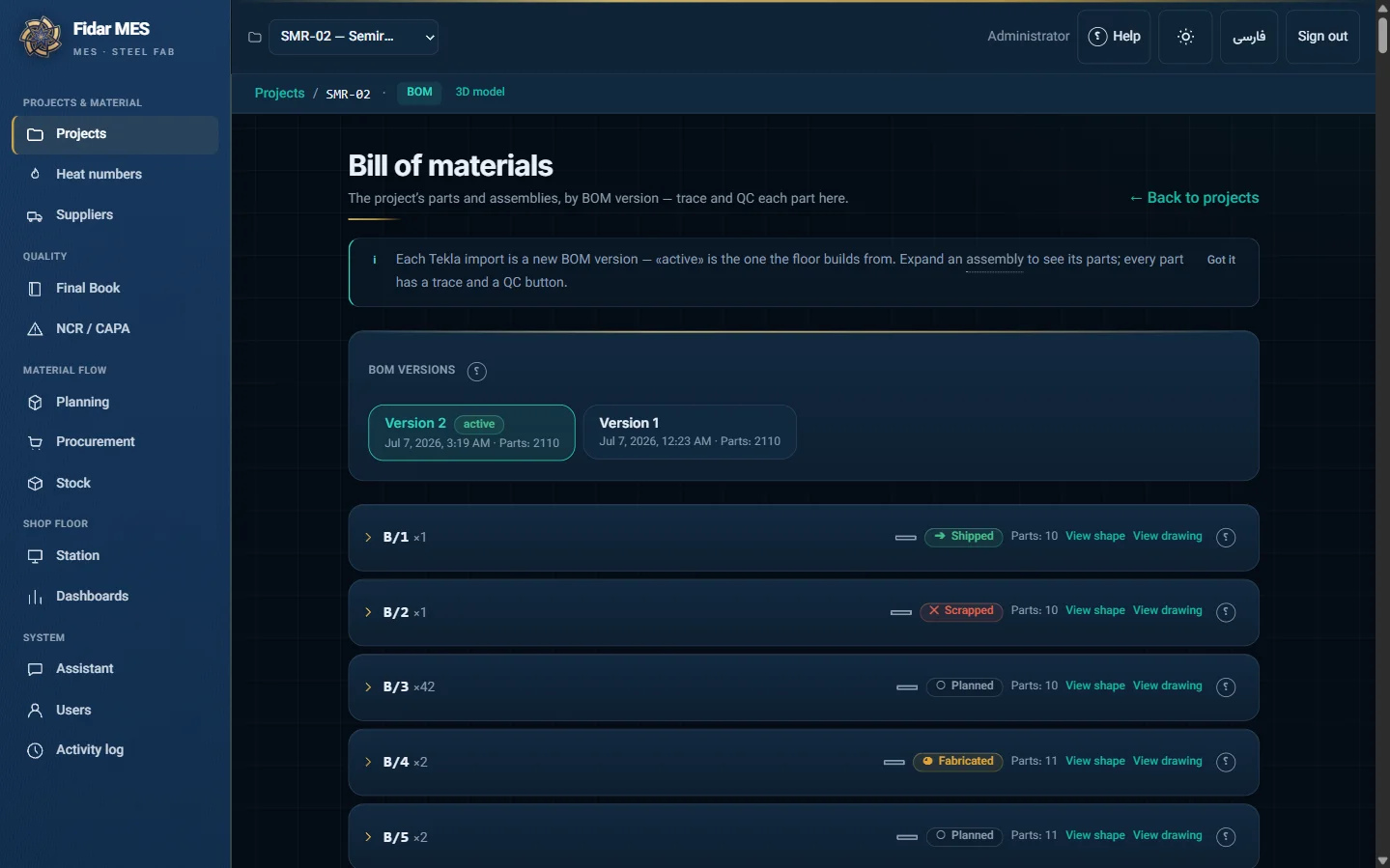
No Manual Re-Entry: Why SteelFlow Pulls the BOM Straight From the Tekla Model
Every manual re-entry of a Tekla model's part list into a spreadsheet BOM is a chance for drift. SteelFlow's Tekla plugin makes the BOM a mechanical consequence of the model, not a separate task.
Linked by Default: Why SteelFlow Ties WPS-WPQ, NDT, and NCR/CAPA to Every Part
Welder qualification, procedure approval, and inspection results usually sit in three disconnected records. SteelFlow keeps them linked to every part from the start, so an audit or a failure doesn't require manual reconstruction.

MES Vendors Are Racing to the Cloud. On a Steel Shop Floor, That's the Wrong Default.
Cloud is the default pitch for new MES rollouts, yet in Rockwell Automation's 2026 survey 44% of manufacturers rank integration as their top requirement and 43% put security second. On a shop floor where the network drops mid-shift, cloud-first isn't a convenience. It's a single point of failure.

End-of-Line Inspection Finds Defects Too Late to Contain a Recall
End-of-line inspection finds defects after the parts have already moved on, and weak traceability turns a small correction into a broad recall. The fix isn't more inspectors. It's capturing the right data at the station, not after the fact.

77% of Manufacturers Use AI. Over Half Aren't Sure Their Systems Are Ready.
In a survey Deloitte cites, only 6% of manufacturers used agentic AI and 24% expected to within two years. Most factories aren't held back by AI, though. They're held back by data that isn't clean, real-time, or structured enough to act on.

We Have an ERP: What Would an MES Add?
Your ERP knows what the order is and what it costs. But "where is part B-214 and who welded it?" is answered somewhere else.
Last updated: